Life is a series of choices, and to make the right choice for yourself, it is best to be completely informed. After a sudden rainfall, you find that you need to improve your drainage around your home. To help redirect water away from your home, you search online for a solution, and now you have another problem. What is the difference between weeping tile and a French drain, and which one do you choose?
This guide will explain how each system works, their pros and cons, and which is best for your property type and drainage concerns.
Quick Comparison Table
|
Feature |
French Drain |
Weeping Tile |
|
Primary function |
Diverts surface water |
Manages groundwater and relieves foundation pressure |
|
Location |
Yard or landscape slope |
Around foundation (exterior) or beneath basement (interior) |
|
Cost |
Usually lower |
Usually higher, especially for external systems |
|
Ideal use case |
Wet or sloped yards, standing surface water |
Leaky basements, foundation water buildup |
|
Maintenance needs |
Can clog with debris over time |
Can clog with roots or sediment, needs inspection |
|
Installation complexity |
Moderate |
More complex, often requires professional work |
What is a Weeping Tile / Drain Tile
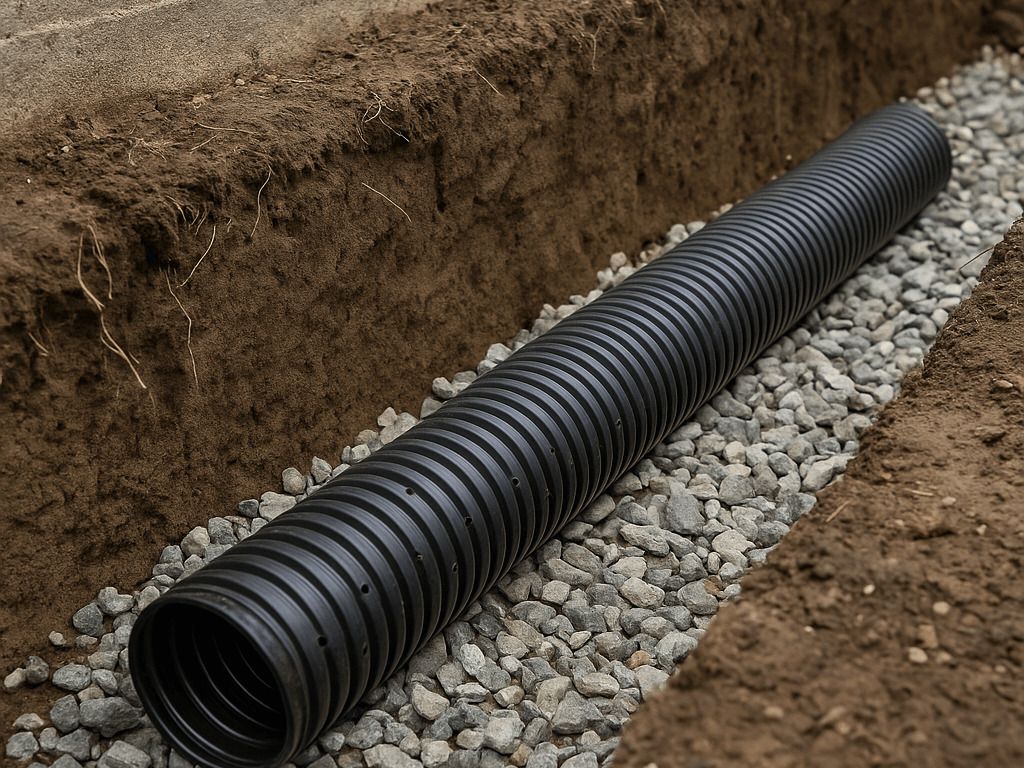
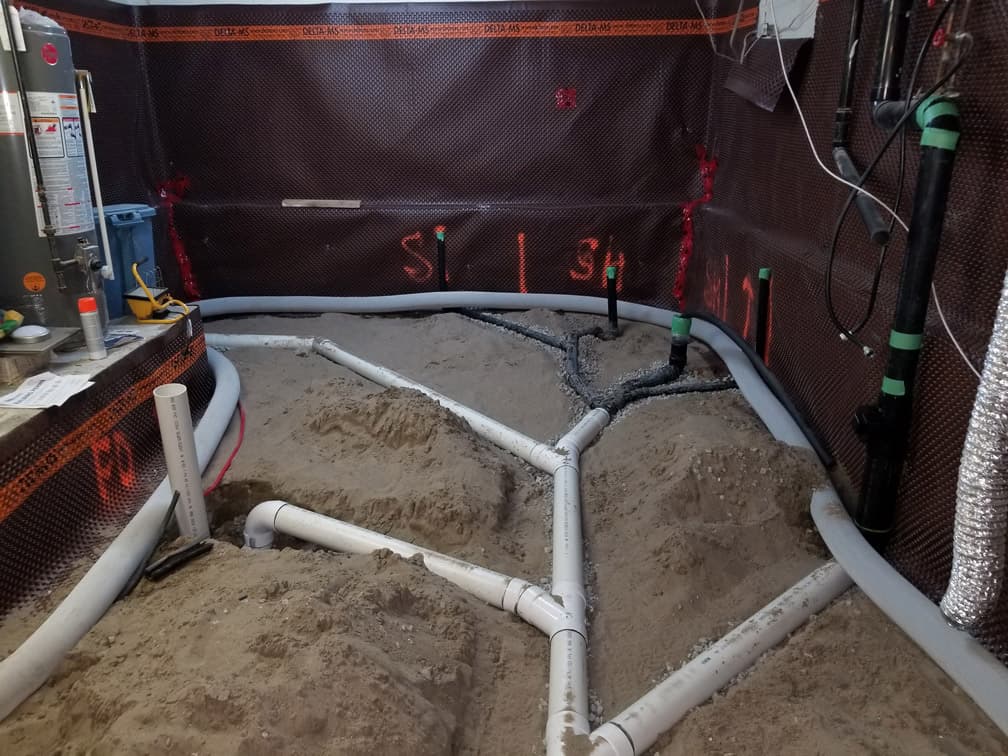
Originally named for the terra cotta clay pipes that allowed water to seep or ‘weep’ into the interior, weeping tile is slightly misnomer. It is not so much a series of tiles but a drain pipe laid in the ground against a house’s foundation. Its purpose is to direct excessive water away from the house.
This is very useful as weeping tiles have been known to prevent floods in a basement and can reduce the possibility of cracks and leaks in a house’s foundation. With less moisture in a home, the risks of mold and mildew are greatly reduced.
This system requires regular maintenance as it has a tendency to become clogged. Soil residue and debris can collect over time, and the roots of trees, shrubs, and bushes can insinuate themselves into the pipes to the point that the pipes are completely plugged.
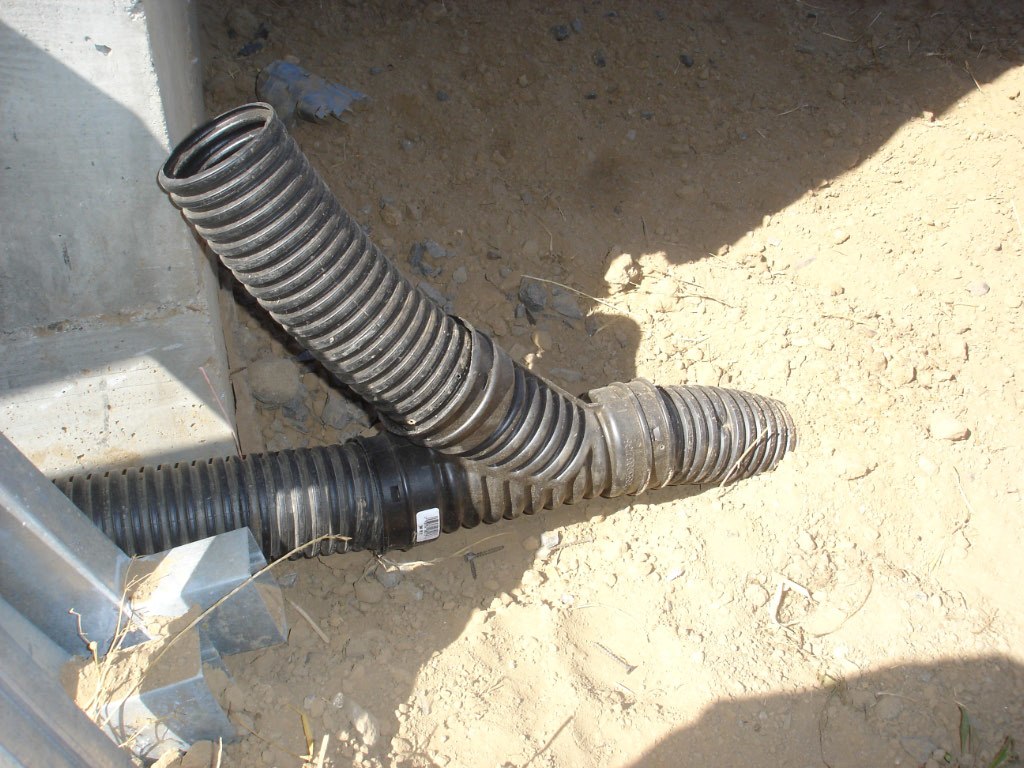
Types of Weeping Tile Systems
Pros and Cons of Weeping Tile
There are benefits and drawbacks to installing weeping tile.
Pros
- They help to prevent foundation cracking by reducing water pressure on the foundation.
- They help to reduce mould and mildew growth in the basement.
- They help to prevent basement flooding.
- They help to improve drainage in the soil around the home.
- They work well in concert with sump pumps.
Cons
- They tend to have a relatively high cost to install.
- They can become clogged with sediment and roots requiring professional help to clean or replace.
- They generally require professional installation as they are complex systems.
What is a French Drain?
A French drain is a simple but effective system designed to control surface water. It consists of a narrow trench lined with gravel, a perforated pipe to collect water, and more gravel or soil to cover it. Its purpose is to redirect surface water away from a problem area, typically downhill.
French drains are especially useful in sloped landscapes or yards that collect standing water. They are also common in landscaping and outdoor drainage solutions.
Pros
- They can be quite efficient at diverting water to a different location.
- They can be relatively inexpensive especially if the area is smaller.
- Because they are hidden from view, the environment appears undisturbed.
- They can, potentially, last for decades if installed properly.
- They can prevent erosion in the soil.
Cons
- They can become clogged with particles, debris, and roots.
- They usually require a lot of digging which is unattractive in the short term.
- Because they may interrupt the natural flow of water, they may cause pooling or other problems.
- They may require permits depending on local municipalities.
Which Drainage System is Best for Your Home?
Which type of drainage system is best for you? The answer depends on the type of water problem you are experiencing.
If you are dealing with standing water in your yard or runoff down a slope, a French drain may be the more suitable and cost-effective option. It is designed to handle surface water and redirect it safely away from the affected area. If your basement is experiencing water leaks, dampness, or mold after rain, a weeping tile system is likely the better choice. It is built specifically to manage groundwater and reduce pressure against the foundation, preventing internal water intrusion.In some cases, both systems may be necessary. For example, a property with both yard drainage issues and basement seepage may benefit from installing a French drain to handle surface runoff and a weeping tile system to address subsurface water.
Speak With a Drainage Expert Before You Decide
Before you decide which of these major projects is best, consult with the experts.
Water Guard Plumbing, with over 20 years of experience, will meet with you to discuss your needs, give you a free estimate, and back it all up with a 100% satisfaction guarantee. Contact us today to discuss all things drainage.


